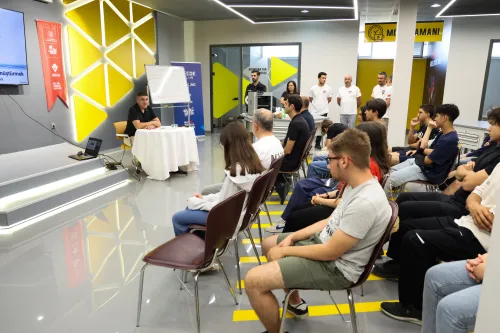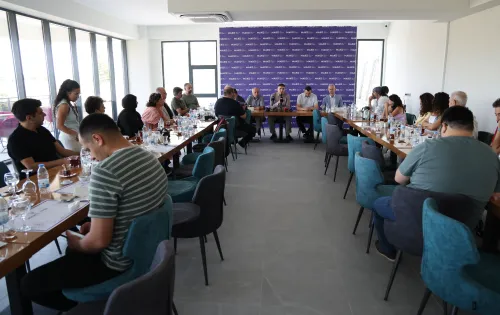

A Ramsar Areas Workshop was organized at MAKÜ within the scope of World Wetlands Day.
Yapılış Tarihi | 02 February 2026, Monday

What are Ramsar sites?
Ramsar sites refer to wetlands that are globally committed to be protected, named after the international convention signed in 1971 in the city of Ramsar, Iran. There are 86 wetlands in Turkey. With the signing of the Ramsar convention, 14 wetlands in our country have been declared as Ramsar Sites. One of them is Lake Burdur.
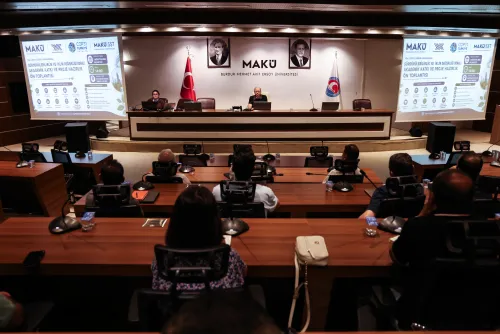
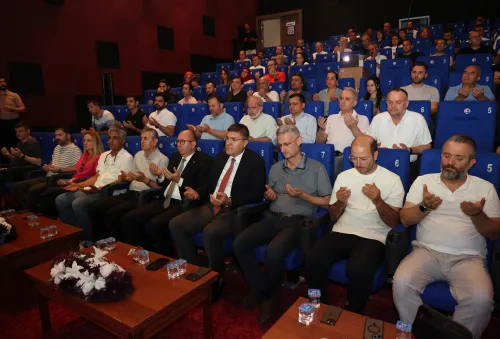
Burdur Mehmet Akif Ersoy University (MAKÜ) hosted an important event as part of World Wetlands Day on February 2. The “Ramsar Wetlands Workshop”, organized in cooperation with the UNESCO Turkey National Commission, Burdur Governorship, Nature Conservation and National Parks Directorate, and MAKÜ, was held at MAKÜ Lavanta Tepesi Hotel.
The opening speech of the workshop was made by Prof. Dr. İskender Gülle, Director of the Salda Lake Science, Education and Nature Conservation Application and Research Center. Gülle emphasized that wetlands are not only natural ecosystems but also indispensable living spaces in terms of human history and future. Drawing attention to the fact that about half of the world's wetlands have been lost since the industrial revolution, Gülle said, “Protecting wetlands is not a choice, it is a necessity. These areas are not to be saved for today, but to be entrusted to tomorrow.”
Gülle also emphasized the importance of young people's participation in the event, stating that gaining environmental awareness at an early age is decisive in the protection of wetlands.
“Wetlands are also Carriers of Cultural Heritage”
Nature Conservation and National Parks 6th Regional Director Mahmut Remel, in his speech, reminded that the theme for 2026 by Ramsar has been determined as “Wetlands and Cultural Heritage”. Remel stated that wetlands play an important role not only in biodiversity but also in shaping human history and civilizations, and said that these areas are one of the strongest natural tools in combating climate change.
“The reflection of scientific knowledge to society is very valuable”
MAKÜ Rector Prof. Dr. Hüseyin Dalgar also stated that the main goal of universities is to contribute to society with the knowledge they produce. Emphasizing that drought and climate change pose a serious threat to the region, Dalgar said that the scientific data to emerge from the workshop will be guiding for decision-makers.
Pointing out that Lake Salda is a wetland that attracts international attention, Dalgar stated that with the Salda Science Center and the planned space-themed science center projects, the region will become an important center in terms of science tourism.
“Lake Burdur is now facing a critical threshold”
Burdur Mayor Ali Orkun Ercengiz drew attention to the water loss experienced by Lake Burdur. Expressing that sufficient lessons have not been learned since the years the Ramsar Convention was signed, Ercengiz said, “It is not too late for anything. What matters is to take the right and quick steps today.” Stating that the implementation of the Lake Burdur Action Plan is promising, Ercengiz emphasized that the implementation of the results from the workshop is of vital importance.
“Protecting wetlands is protecting life and culture”
Burdur Governor Tülay Baydar Bilgihan also stated in her speech that wetlands are not only water resources but also a part of culture, production, and social memory. Emphasizing that the protection of wetlands is a shared responsibility, Bilgihan highlighted the necessity of local governments, academia, public institutions, and civil society acting together. Bilgihan stated that the correct use of water and the implementation of urgent action plans are now inevitable.
International perspective and technical presentations
UNESCO Turkey National Commission Vice President Prof. Dr. Nizamettin Kazancı addressed international approaches in the protection of wetlands. Stating that Lake Burdur is not only a part of natural but also social and economic history, Kazancı said that opening lake areas to agriculture or construction is a serious mistake. Kazancı emphasized that even individual water conservation is an important start in this process.
As part of the workshop, Prof. Dr. Mehmet Emekçi from Hacettepe University made presentations titled “Water Resources Management and Water Security in Turkey”, and Prof. Dr. F. Güler Emekçi presented “The Effects of Drought on Freshwater Fish and Endemic Species”. Harun Ekinci from the Nature Conservation and National Parks 6th Regional Directorate also made a presentation on “Turkey's Ramsar Sites and Lake Burdur”.
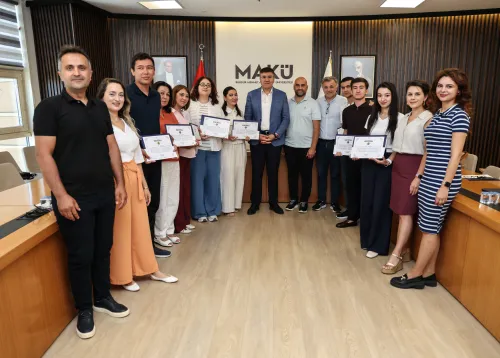
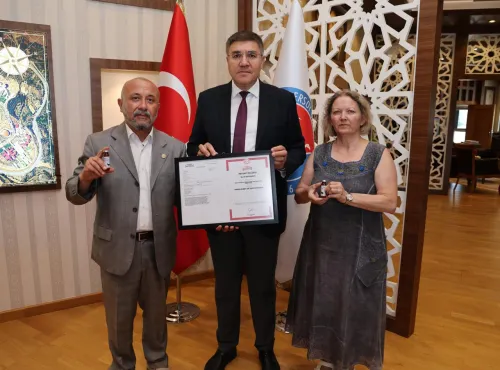
At the end of the program, certificates of appreciation were presented to the speakers, followed by a panel on “Conservation, Sustainability, and Management of Wetlands” moderated by UNESCO Turkey National Commission Vice President Prof. Dr. Nizamettin Kazancı. The event concluded with a visit to the photo and visual exhibition themed “Reflections from Turkey's Ramsar Sites and Wetlands”.